
Rote Work

Several weeks ago, me and another reporter lingered at a player’s locker after a postgame media scrum to ask a couple of clarifying questions. This is normal practice, and sometimes these conversations drift into “off the record” territory. The unspoken professional agreement in those situations is that whatever is said does not get used in a story.
Oftentimes, players relax a little in these moments and tell you more than they would with the recorder on, or at least they might say something in a different way than they would otherwise.
In this case, we were talking to a hitter who had been struggling at the plate for months. The conversation boiled down to him feeling like he wished he could wipe the slate clean somehow and just start over as a hitter. Somewhere along the way things at the plate had gotten too complicated.
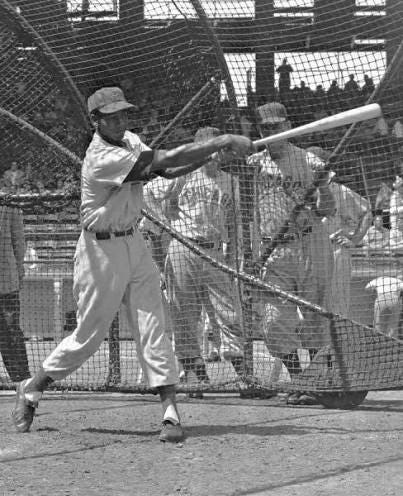
He did get things turned around not long after that. He did it by identifying and working relentlessly on the biggest weakness in his approach. He knew what it was, and obviously opposing pitchers had figured it out too. There was nothing to be done except the repetitive and analog work of getting in the batting cage and facing the type of pitch that was giving him fits over and over until he got it right.
Consider this against the cultural fixation on ease and automation. Or, at least, a certain segment of the culture’s fixation on those things. I’ve never seen a PR campaign as strong as the one for artificial intelligence, and the argument in its favor most often boils down to a belief that it’s going to make life easier because AI is going to do so much for us.
I’m begrudgingly willing to accept that it could happen, but for now I’m stuck with a lot of tools that I mostly feel like I’m managing, as opposed to making my life easier. Before I started writing this, I sent a quick work email, and I got an AI-suggested edit to make my sentence more concise. The new sentence would have been exactly one word shorter and also grossly ungrammatical.
This doesn’t strike me as worth drying up our fresh water sources and filling open land with data centers, but I’m sure grander capabilities are just around the corner.
I’m aware that there are some useful things being done by AI, but I’ve yet to see an example of something couldn’t be done by a human being. It might require a few more steps and take a bit longer, but there won’t be a need to take the time fixing goofy AI mistakes. Humans have been promised an unburdened life brought to them by technology many times in the past, and yet the work week or work day isn’t any shorter.
And more importantly, I think it’s worth fighting for the dignity of God-given human capability. I’m not interested in the dreary, directionless life of ease and leisure the CEOs of these companies are trying to build because it strips us of a core component of being human. Work and effort are not drudgery. Sometimes it’s what gives us life.
There wasn’t a substitute for this player looking to fix what was wrong. It took time and repetition. I would argue something similar is true for the creep of certain technologies in our lives. The reward is actually a lot smaller than we’re led to believe, and the cost is much, much greater.
Things I’ve Done Lately:
With the All-Star break and a family trip up north, I’ve been a little quiet. But I’m back to the ballpark this week, so keep an eye out on CHGO.
What I’m Digging Right Now:
Ian Fleming’s routine while writing the Bond novels made the rounds again recently, and it’s a good reminder of two things: The importance of deliberate and focused effort and the need for purposeful time away from work.
Thomas McGuane’s The Longest Silence. He’s a part of a passing breed, which is a shame.
The kids are all going fishing. I don’t remember this much passion for angling when I was young, but the kids these days, they’re putting the screens down more and more and picking up fishing poles instead. And when they are on an app, a lot of them are using Fishbrain to share their experiences and where the fish are biting.